
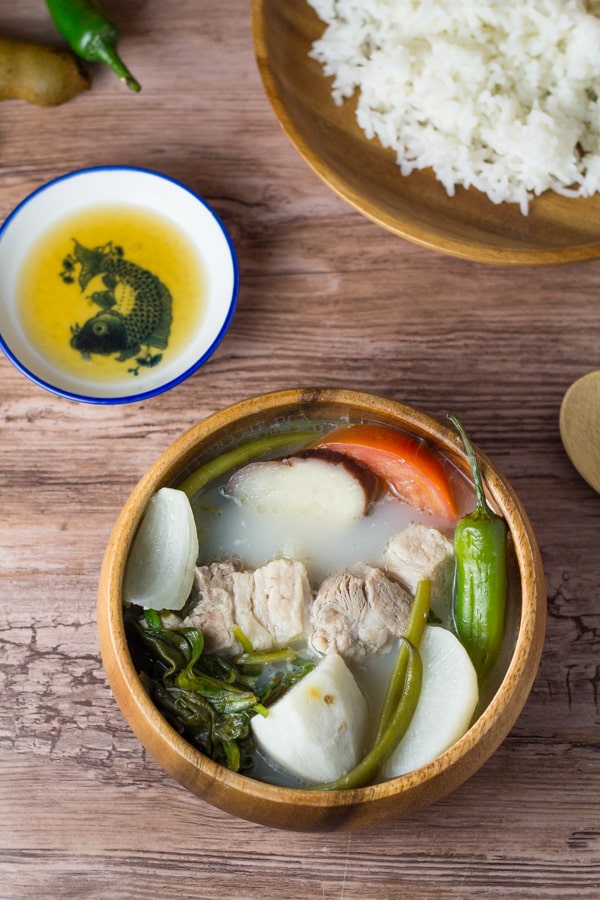
For pork sinigang, pork belly is the popular cut to use but pork shoulder, neckbone (butu-buto), tailbone (buntot) or spareribs may also be used. For this recipe, I used pork shoulder, a variety of vegetables and frozen unripe tamarind pods to flavor the broth. This soup is so easy to make. The pork is first boiled until tender and the vegetables are then added. The tamarind juice is added afterwards.
This sour and savory soup is a comforting dish for me when I was growing up. I loved coming home from school to a bowl of piping hot sinigang and a plate of steamed rice. 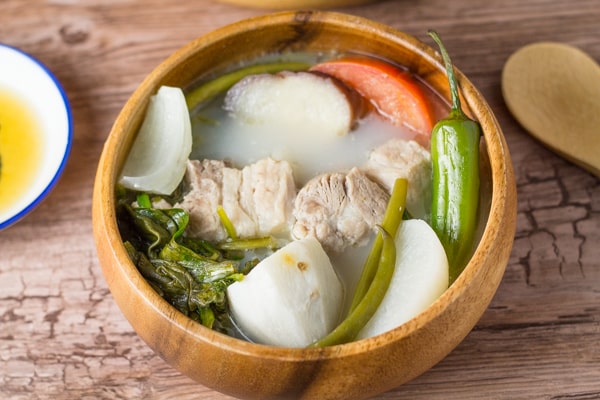
Cooking Tips
For the best flavor, let the pork simmer gently. This allows the meat to become tender while the flavors meld beautifully. If you have the time, marinate the pork in a bit of fish sauce or soy sauce before cooking. This step adds depth to the dish. Also, be mindful of when you add the vegetables. Sturdier vegetables like radish or eggplant can go in earlier, while leafy greens should be added just before serving to keep them vibrant and fresh.
Serving Suggestions
Sinigang is best served hot, accompanied by a steaming bowl of white rice. The rice soaks up the savory broth, making each bite satisfying. For a little extra kick, serve it with a side of patis, a Filipino fish sauce, which can elevate the flavors even more. You might also consider a simple side salad or some grilled fish to round out the meal. This combination makes for a comforting and hearty dining experience.
Frequently Asked Questions
What can I use instead of tamarind pods?
If you can’t find tamarind pods, a tamarind seasoning mix works great as an alternative. Just follow the package instructions for the right quantity to use.
How do I store leftover sinigang?
Store any leftovers in an airtight container in the fridge for up to three days. If you want to keep it longer, consider freezing it, but the texture of the vegetables may change when reheated.
Can I make sinigang ahead of time?
You can make sinigang ahead of time and reheat it when you’re ready to eat. Just make sure to add leafy greens right before serving to keep them fresh and vibrant.
What are some good side dishes to serve with sinigang?
Sinigang pairs perfectly with steamed white rice, which helps soak up the flavorful broth. You might also consider serving a side of fried fish or a simple green salad for a complete meal.
What are common mistakes to avoid when making sinigang?
One common mistake is adding all the vegetables at once, which can lead to overcooking. Make sure to add sturdier veggies first and save the leafy greens for the end to keep everything fresh.
Pork Sinigang

Ingredients
- 8 oz (227 g) package frozen unripe tamarind pods or 1 packet of tamarind seasoning mix
- 2 lb pork shoulder or skinless pork belly, cut into 1-inch pieces
- 12 cups water, divided
- 1 tbsp kosher salt plus more to taste
- 6 pieces taro roots, peeled and cut in halves
- 1 small daikon, peeled and sliced into ½-inch diagonal pieces
- 1 Chinese eggplant, sliced into ½ inch diagonal pieces
- 4 oz green beans, trimmed
- 1 tomato, cut into wedges
- 1 small onion, sliced
- 4 cups baby spinach
- 2 whole serrano peppers
- Steamed rice, for serving
- Fish sauce, for serving
Instructions
- If using tamarind pods, combine the tamarind and 2 cups water in a saucepan. Cook over medium-high heat for 10 minutes or until the tamarind is soft. Using the back of a spoon, mashed the softened tamarind. Strain the juice into a bowl and set aside. Discard the seeds and shells.
- In a large pot, place the pork and 10 cups of water, if using tamarind pods or 12 cups of water if using seasoning mix. Bring the mixture to a boil over high heat. Add salt, lower heat to medium and simmer covered for 1 hour or until pork is tender.
- Add the taro roots and cook for 5 minutes. Add the daikon, eggplant and green beans, and cook for 10 more minutes or until the vegetables are tender.
- Stir in the tamarind juice or seasoning mix, and simmer for 5 minutes. Add the tomato, onion, spinach and peppers. Season to taste with salt.
- Serve with steamed rice and fish sauce on the side.
Nutrition
How do you keep your broth creamy white?
I used a mix and it turns brown.
Based on my experience, using tamarind pods instead of sinigang mix will make the broth creamy white. Hope this helps!
Hello, I was able to find tamarind puree at a store. Will this work? thank you.
Hi Clara,
I have not used tamarind puree for sinigangs but I am pretty sure it can be used. Soak the puree in hot water for an hour and then break them into small pieces. After that, let it soak again for couple of hours and finally strain the juice into a bowl. Hope these help!
Hi! Where do you find the frozen pods?
Hi Monique,
Here in Vancouver, Canada, I buy the frozen pods from Filipino stores or stores that carry Filipino items.
Hi we loved this recipe were glad that you use tamarind. Cause we are sensitive to msg
Thank you
Omigosh, I have been looking for a sinigang recipe which uses tamarind pods vs. the msg-laden seasoning mixes. We are sensitive to MSG and so happy you shared this! I remember learning how to make this when I visited some relatives in the PI. As an adult, it was a fond memory, but couldnt’ remember exactly how to make it. I can’t wait to try your recipe and so happy I came across your blog. Thank you so much!
You’re welcome Wendy! I used to make sinigang with the mix but now I use the frozen/fresh ones all the time.
Definitely omit the salt if you use the packet mix. It is a very good soup.
Thanks
NONG nakita ko ito hahaha biglang kumalam ang sikmura ko.. sarap naman niyang sinigang nayan.