
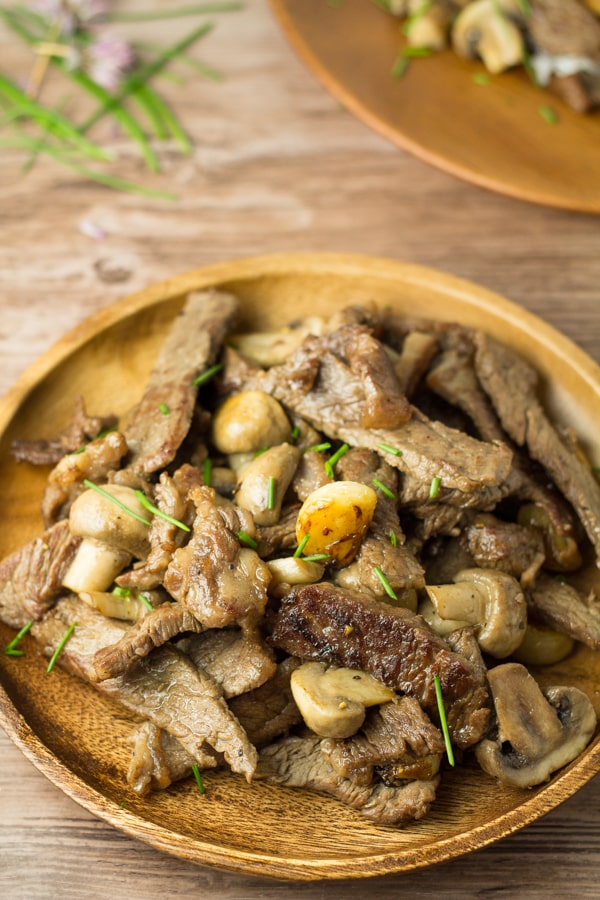
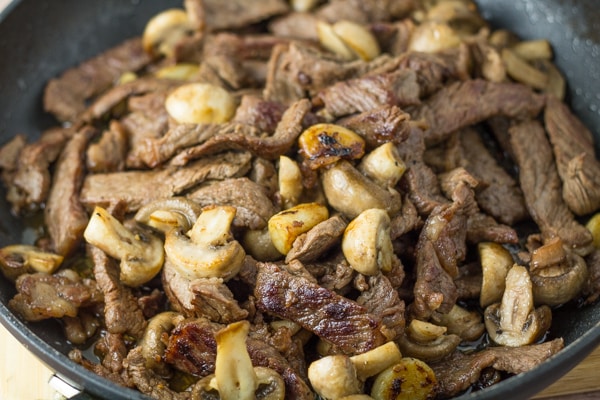
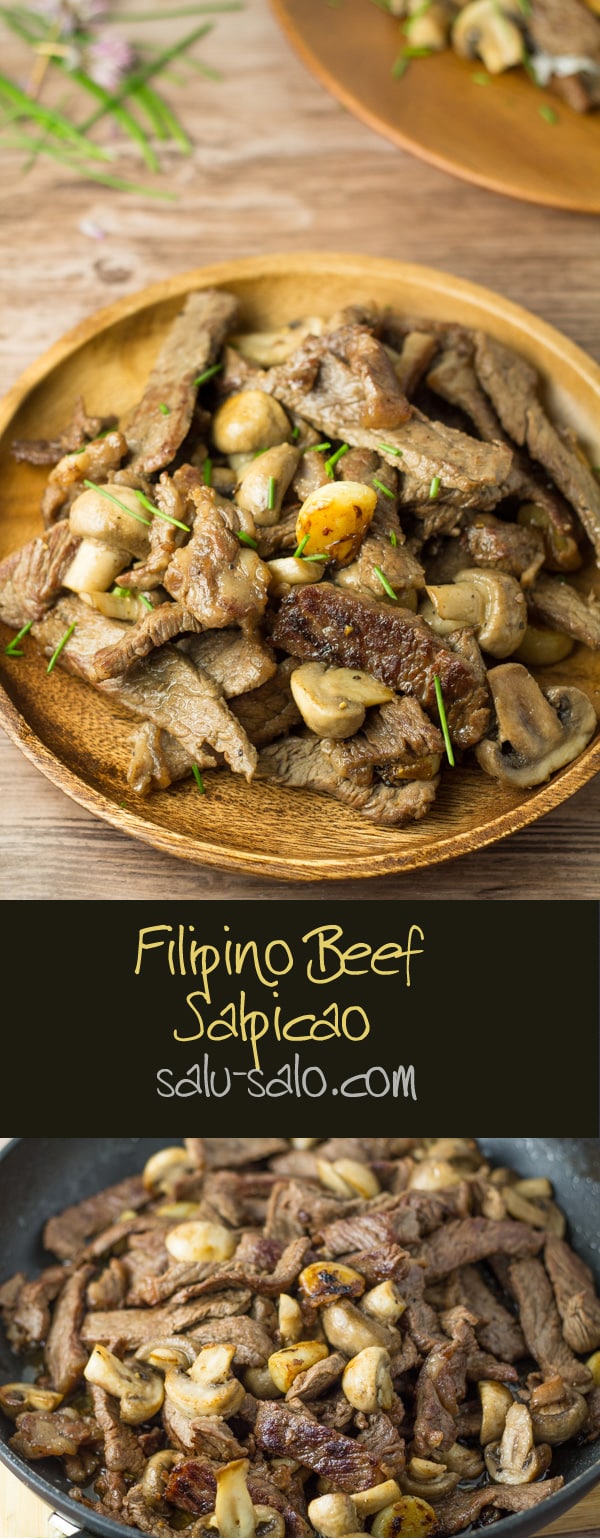
Beef salpicao consists of tender pieces of beef with mushrooms. It is seasoned with a lot of garlic, butter, paprika and soy sauce. Sirloin beef or tenderloin can be used, but this particular recipe uses rib-eye. There are also different versions of salpicao out there including chicken, pork or even seafood. No matter which protein is used, this dish is always super flavorful and garlicy. 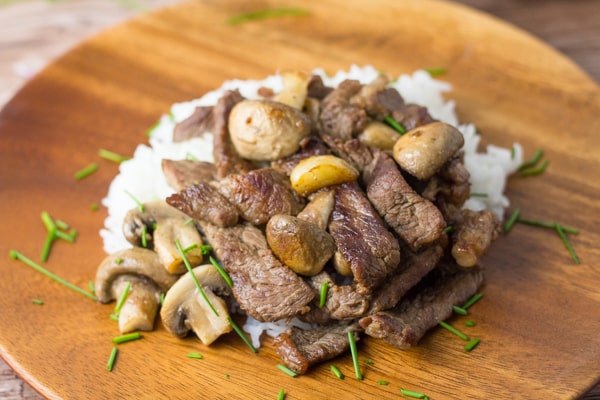
Cooking Tips for Perfect Beef Salpicao
To achieve the best beef salpicao, start with the right cut of meat. Rib-eye is a great choice because of its marbling, which adds flavor and tenderness. If using sirloin or tenderloin, be careful not to overcook it since these cuts can dry out quickly. When cutting the beef, slice it against the grain to ensure each piece is tender. Marinating the beef in soy sauce and garlic for at least 30 minutes can enhance the flavor, so consider planning ahead. When cooking, use a hot pan to sear the beef quickly. This helps lock in the juices and gives that lovely brown crust. Don’t overcrowd the pan, as this can cause steaming instead of searing. Finally, stir in the garlic and butter towards the end to prevent burning, keeping that rich, garlicky flavor intact.
Serving Suggestions and Pairings
Beef salpicao is delicious on its own, but it can be paired with various sides to create a satisfying meal. A popular choice is steamed white rice, which balances the richness of the dish. For added flavor, consider serving it with garlic rice, which complements the garlic in the salpicao. A fresh side salad with a tangy vinaigrette can also provide a refreshing contrast to the savory beef. If you want to add some color to the plate, sautéed vegetables like green beans or bell peppers work well. For a complete dinner experience, serve it with a light soup such as miso or a simple broth. If you’re entertaining, consider presenting the beef salpicao in a large serving dish, garnished with chopped parsley or green onions for a pop of color. This not only looks appealing but also encourages everyone to dig in together.
Frequently Asked Questions
Can I use a different cut of beef?
Sure thing! While rib-eye is a great choice for its marbling and flavor, you can also use sirloin or tenderloin. Just be careful not to overcook those leaner cuts.
What can I substitute for olive oil?
If you don’t have olive oil on hand, grapeseed oil or avocado oil works well too. They have high smoke points and won’t alter the flavor too much.
How do I store leftover beef salpicao?
Store any leftovers in an airtight container in the fridge for up to three days. Just reheat gently on the stove to keep the beef tender.
Can I make this dish ahead of time?
Yes, you can marinate the beef ahead of time, which will enhance the flavors. Just cook it fresh right before serving for the best texture.
What should I serve with beef salpicao?
This dish pairs nicely with steamed rice or garlic fried rice to soak up all that delicious sauce. A side of sautéed vegetables or a fresh salad adds a nice balance too.
Beef Salpicao

Ingredients
- 2 rib eye steaks , about 11 oz each
- 3 tbsp olive oil , divided
- 12 cloves garlic , peeled
- 8 oz small button mushrooms , halved
- Sea salt and freshly ground cracked pepper
- 1 tbsp butter
- 1/8 tsp smoked paprika
- 1 tsp soy sauce
Instructions
- Slice the steaks crosswise into 1/8-inch pieces. Season with salt and pepper. Set aside.
- In a large skillet, heat 2 tablespoons of oil over medium high heat. Add the garlic and cook, stirring until lightly brown, about 2 minutes.
- Add the mushrooms and saute until the mushrooms are cooked, about 2 minutes. Season with salt and pepper. Transfer the mushrooms onto a plate.
- Add the remaining tablespoon of oil into the empty skillet and heat over medium high heat. Add the sliced beef and cook, stirring occasionally until brown, about 5 minutes.
- Add the cooked mushrooms (plus accumulated juices) to the skillet and stir. Add the butter, paprika and soy sauce. Stir until combined.
- Serve with steamed rice.
Nutrition
may i use spanish paprika instead of smoked?
Hi Clarissa,
Yes, you can definitely use Spanish paprika.