
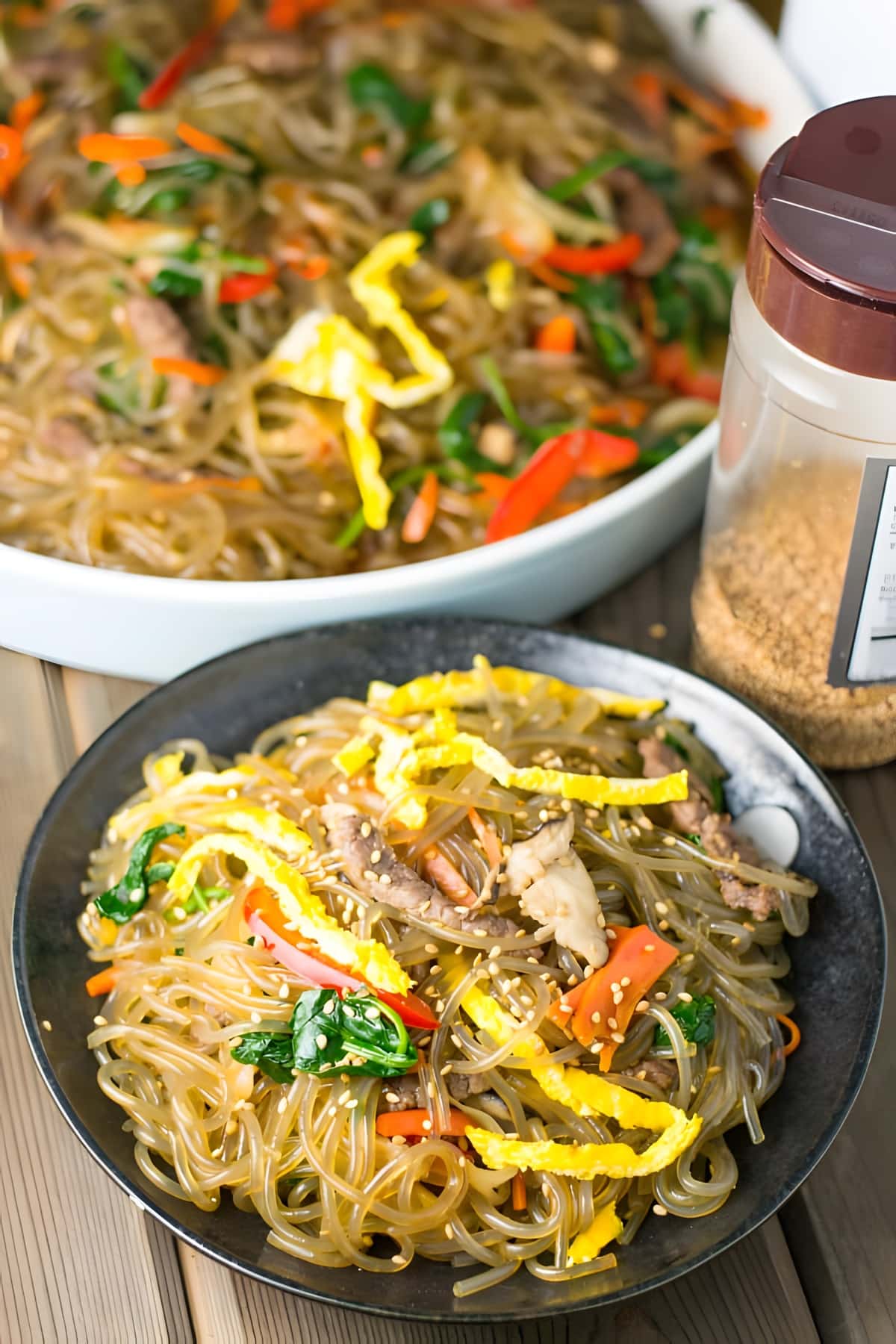
Cooking Tips for Perfect Japchae
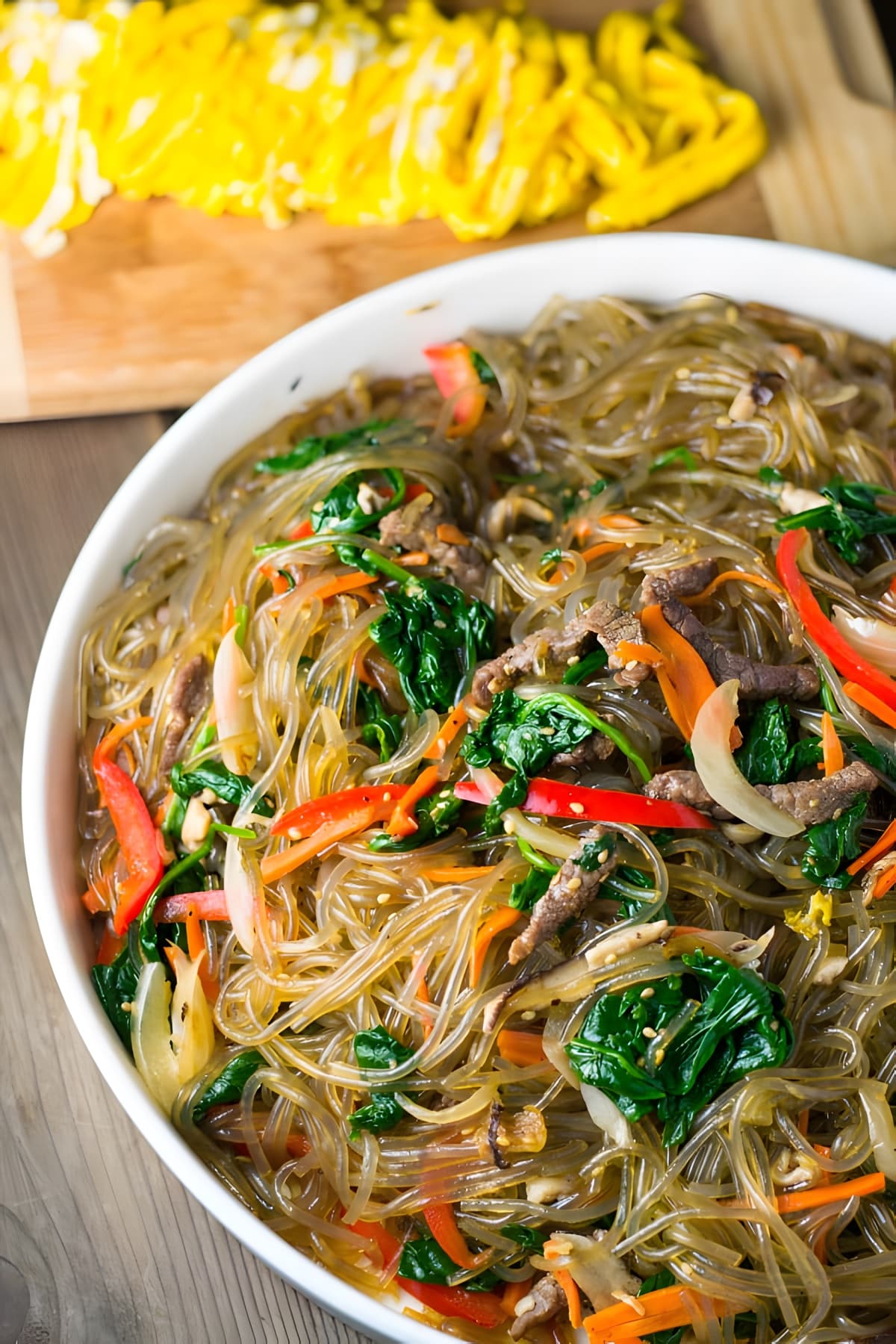
To achieve the best texture for your japchae, soak the sweet potato noodles in warm water for about 30 minutes before cooking. This helps them soften without losing their chewy texture. When stir-frying, make sure your pan is hot, and add the ingredients in batches if necessary. This prevents overcrowding and ensures everything cooks evenly. Use a mix of oils for flavor, like sesame oil for its nutty aroma and vegetable oil for high heat. Finally, don’t forget to taste and adjust the seasoning as you go. A little more soy sauce or a dash of sesame oil can elevate the dish.
Serving Suggestions and Storage
Japchae is versatile when it comes to serving. It can be enjoyed as a main dish or a side. Pair it with grilled meats or serve it alongside kimchi for a balanced meal. If you have leftovers, store them in an airtight container in the fridge for up to three days. Reheat gently in a pan over low heat. Adding a splash of water can help revive the noodles and prevent them from drying out. For a fresh twist, consider topping your reheated japchae with a fried egg or fresh herbs like cilantro before serving.
Frequently Asked Questions
Can I use a different type of noodle?
Yes, if you can’t find sweet potato vermicelli, you can substitute it with regular rice vermicelli or even soba noodles. Just keep in mind that the texture and flavor will be a bit different.
How do I store leftover japchae?
Store any leftovers in an airtight container in the fridge for up to three days. Just reheat it on the stove or in the microwave, and add a splash of water or soy sauce to help revive the noodles.
Can I make japchae ahead of time?
You can prepare the ingredients ahead of time, like cutting the veggies and cooking the beef. Just combine everything and stir-fry it right before you’re ready to serve for the best texture.
What can I serve with japchae?
Japchae pairs really well with grilled meats, like Korean BBQ, or other Korean dishes like kimchi and bulgogi. It also makes a great side for a bowl of rice.
What are some common mistakes to avoid when making japchae?
One common mistake is overcrowding the pan while stir-frying. This can lead to steaming instead of frying, so cook in batches if needed. Also, make sure to soak the noodles properly to get that perfect chewy texture.

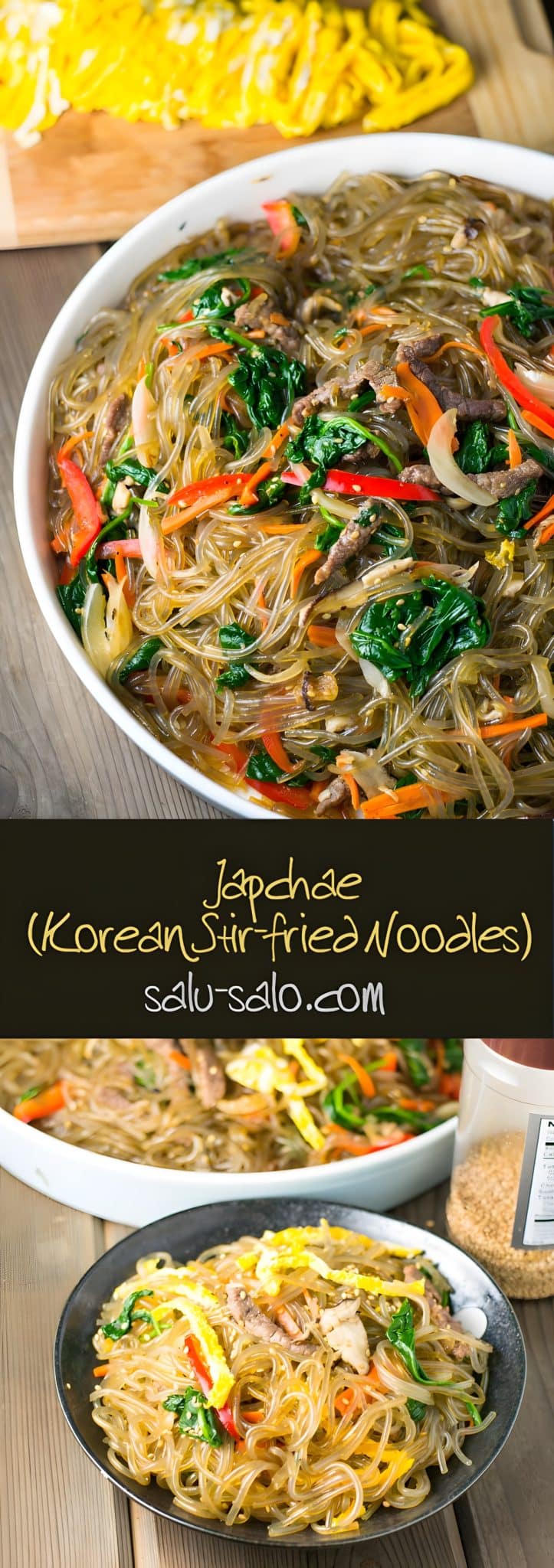
Japchae (Korean Stir-fried Noodles)

Ingredients
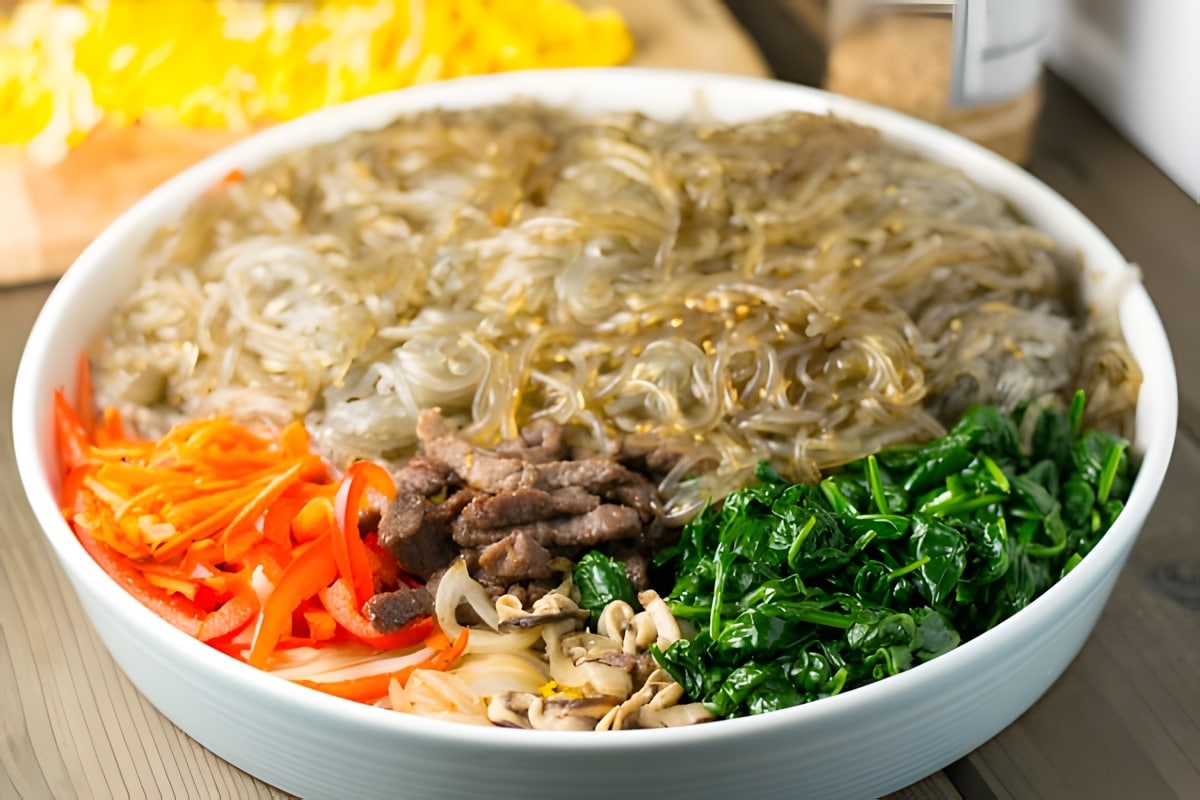
- ½ lb beef sirloin sliced into thin strips
- 2 eggs lightly beaten
- 1 medium onion thinly sliced
- 1 medium carrot peeled and sliced into thin strips
- ½ red bell pepper sliced into strips
- 6 fresh or dried re-hydrated shitake mushrooms stems removed and thinly sliced
- 1 package (12 oz) spinach
- 1 package (400g/14.11oz) sweet potato vermicelli noodles
- Kosher salt
- Sesame oil
- Roasted sesame seeds
Beef marinade:
- 1 tbsp soy sauce
- 1 tbsp sugar
- ½ tbsp sesame oil
- 1 clove garlic grated or minced
- ½ tbsp mirin optional
Sauce:
- 1/3 cup soy sauce
- 1/3 cup sugar or honey
- 2 tbsp sesame oil
- 1 tbsp sesame seeds
- 1 clove garlic grated or minced
- Freshly ground black pepper
Instructions
- In a bowl, whisk together ingredients for the marinade. Add beef and toss to coat evenly. Cover with plastic wrap and let marinade for at least 10 minutes.
- Heat 1 teaspoon olive oil in a large non-stick pan over medium heat. Add beaten eggs and cook until firmly set. Fold in half and remove from the pan; cut into long thin strips. Set aside.
- Using the same pan, heat 1 teaspoon olive oil over medium heat. Add onion and a pinch of salt; stir fry until soft and translucent. Transfer onion to a large plate.
- Repeat step 3 (omitting salt) for carrot, bell pepper and mushroom.
- In the same pan, add the seasoned beef and stir fry until browned and all moisture has evaporated. Transfer beef to a plate.
- Wash and blanch spinach in boiling water, drain and squeeze the excess water. Season with sesame oil and salt. Set aside.
- Cook the noodle in boiling water for 6-10 minutes. Drain well. Drizzle noodles with sesame oil and toss to coat. This step is necessary to avoid noodles sticking together.
- In a small bowl, whisk together ingredients for the sauce. Pour over the noodles and toss to coat evenly.
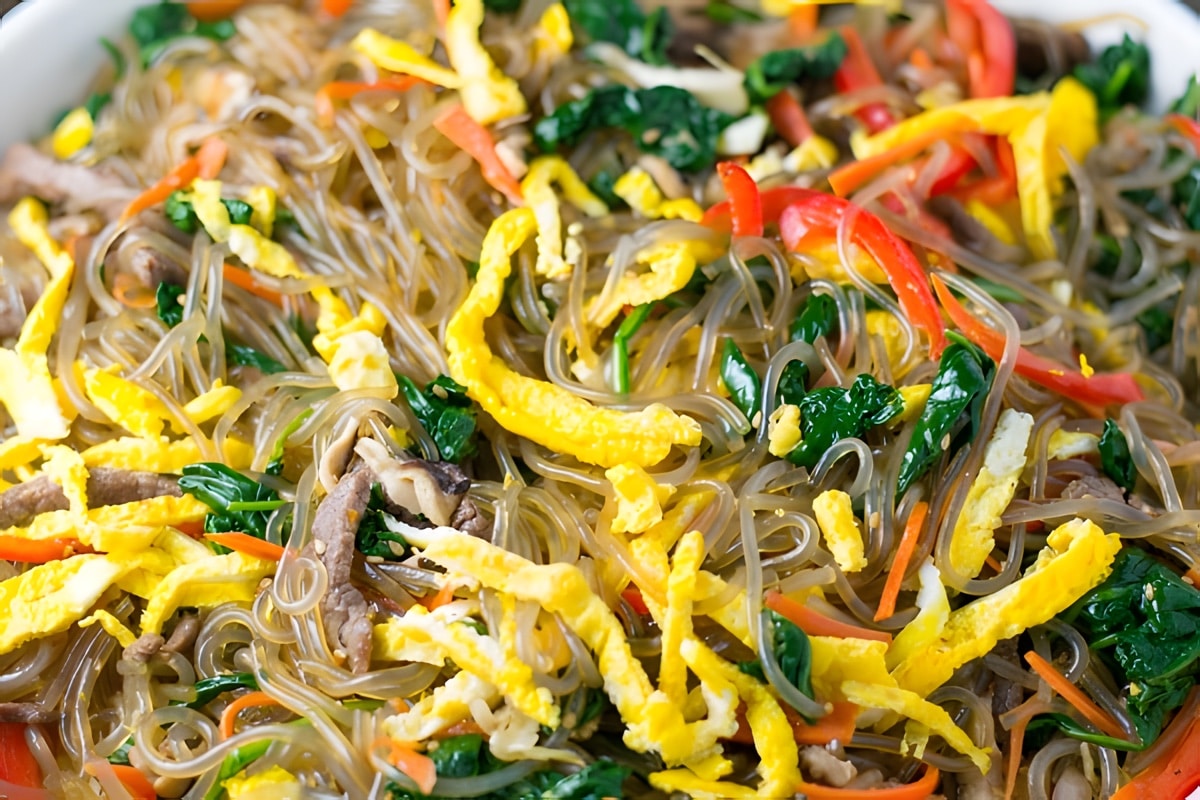
- Toss seasoned noodles, beef and vegetables together. Add half of the omelette and gently toss to combine.
- Transfer to individual plates. Garnish top with long strips of omelette and a sprinkle of sesame seeds.
Notes
Nutrition
I cut batches of the carrots, onion, and peppers and freeze in baggies combined. Saves time if you make this weekly. I blanch the spinach quickly then cook the noodles in the same pot. I also grill a dozen chicken thighs and freeze in twos, I use two for this recipe. Just dicing and tossing in a bit of noodle stir fry sauce before reheating. I do not have an Asian market near me, but Amazon sells them.
This recipe is a labor of love but sooooo worth it. I’ve had this recipe pinned for some time and finally went to my local Asian market to get the ingredients. This recipe is so good! The marinade for the beef is so simple but so good! This will definitely be my go-to 잡채 recipe. Thank you!!
You are welcome Emily!
Hi! Can I use pancit bihon instead of sweet potato vermicelli? Thank you
You can use pancit bihon but the texture and taste will be different.
Can you freeze japchae?
Hi Keana,
It should be okay to freeze japchae. When reheating, you may have to add a bit of water to prevent the noodles from sticking together. Hope this helps!
hi. where did you buy the potato vermicello noodle here in the philippines
Hi Ren,
I live here in Canada and I bought the potato vermicelli in an Asian store. So, I am thinking if you live in the Philippines, you might be able to find them in a Japanese store. Hope this helps!
You can buy near Divisoria Mall. Ask vendor where can you buy korean noodles
Hiya’ what it’s a mirin pls? Thanks
Hi Iris,
Mirin is a type of rice wine, similar to sake but sweeter and can be purchased at any Asian store.