
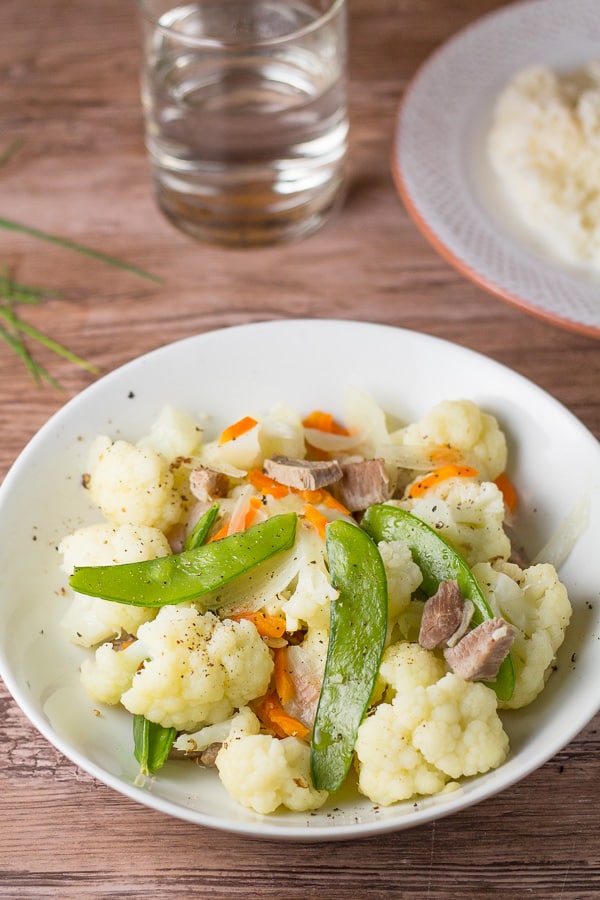
In this dish, I used pork shoulder. The pork is first boiled and cooked in seasoned water until tender and then sliced into thin strips. The sliced pork is then cooked with the sauteed aromatics. Then, the reserved broth is added to cook the vegetables. The vegetables came out crisp tender, the way I like my vegetables. This dish is simple and healthy. My family and I enjoyed this vegetable dish with steamed rice.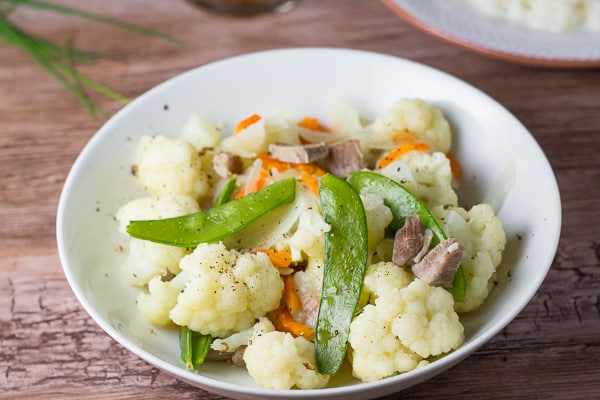
Cooking Tips for Perfectly Sauteed Vegetables
To achieve perfectly sautéed cauliflower and snow peas, pay attention to the heat level. Start with a medium-high flame to quickly sear the vegetables while keeping them crisp. Make sure your pan is hot before adding the oil. This prevents sticking and promotes an even cook. Cut the cauliflower into small florets to ensure they cook evenly and quickly. For snow peas, trim the ends to remove the stringy bits. If you like a bit of crunch, add the snow peas towards the end of the cooking process. They only need a couple of minutes to become tender but retain their snap. Finally, don’t overcrowd the pan; this can lead to steaming instead of sautéing. If you have a lot of vegetables, consider cooking them in batches to get that nice golden color and flavor.
Serving Suggestions and Pairing Ideas
This sautéed cauliflower and snow peas dish is super versatile. Serve it as a side with grilled chicken or fish for a balanced meal. If you’re looking for a vegetarian option, pair it with tofu or tempeh, which adds protein and complements the dish well. For a quick lunch, toss it with quinoa or brown rice for added fiber and nutrients. A sprinkle of sesame seeds on top can add a delightful crunch and a hint of nuttiness. If you want a touch of heat, drizzle some chili oil or add a pinch of red pepper flakes before serving. For a refreshing finish, a squeeze of lemon juice brightens up the flavors beautifully. This dish can also be served at room temperature, making it perfect for picnics or potlucks.
Frequently Asked Questions
What can I use instead of pork shoulder?
If you want a different meat, ground pork or chicken thighs work well. For a vegetarian option, just skip the meat and add more veggies or tofu for protein.
How do I store leftovers?
Store any leftovers in an airtight container in the fridge for up to three days. To reheat, just pop it in the microwave or warm it up in a pan over low heat.
Can I make this dish ahead of time?
You can prep the vegetables and meat ahead of time, but it’s best to sauté them fresh for the best texture. If you do make it ahead, just reheat gently to avoid overcooking.
What can I serve with sautéed cauliflower and snow peas?
This dish pairs perfectly with steamed rice or quinoa. You could also serve it alongside some grilled chicken or fish for a complete meal.
What are common mistakes to avoid when sautéing vegetables?
A common mistake is overcrowding the pan, which can lead to steaming instead of sautéing. Make sure your pan is hot and work in batches if needed to keep everything crisp.
Sauteed Cauliflower and Snow Peas

Ingredients
- ½ lb pork shoulder or belly
- 1 tsp kosher salt plus more to taste
- 2 tbsp canola oil
- 1 medium onion, sliced
- 2 cloves garlic, chopped
- 1 head of cauliflower, around 2 lbs, cut into florets
- 5 oz snow peas, trimmed
- 1 small carrot, around 3 oz, peeled and julienned
- Freshly cracked black pepper
Instructions
- Place the pork in a medium saucepan and then pour enough water to cover the pork. Bring to a boil. Add salt, lower heat to medium and cook, covered until tender, about 30 minutes. Drain the pork and reserve 2 cups of the broth.
- Slice the pork into thin strips. Set aside.
- Using a non-stick pan, heat the oil over medium high heat. Add the onion and garlic, and saute until onion starts to soften, about 2 minutes.
- Add the pork and stir for 1 minute. Add the broth, cauliflower and carrot, and cook covered for 3 minutes. Add the snow peas and continue cooking for another 1 minute. Season with salt and pepper to taste.
- Serve hot with steamed rice.
Nutrition
Leave a Reply