
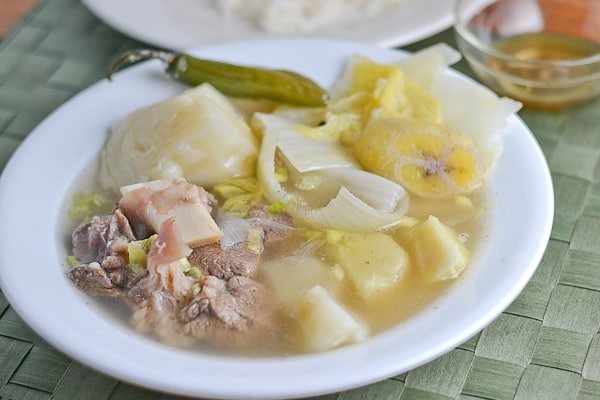
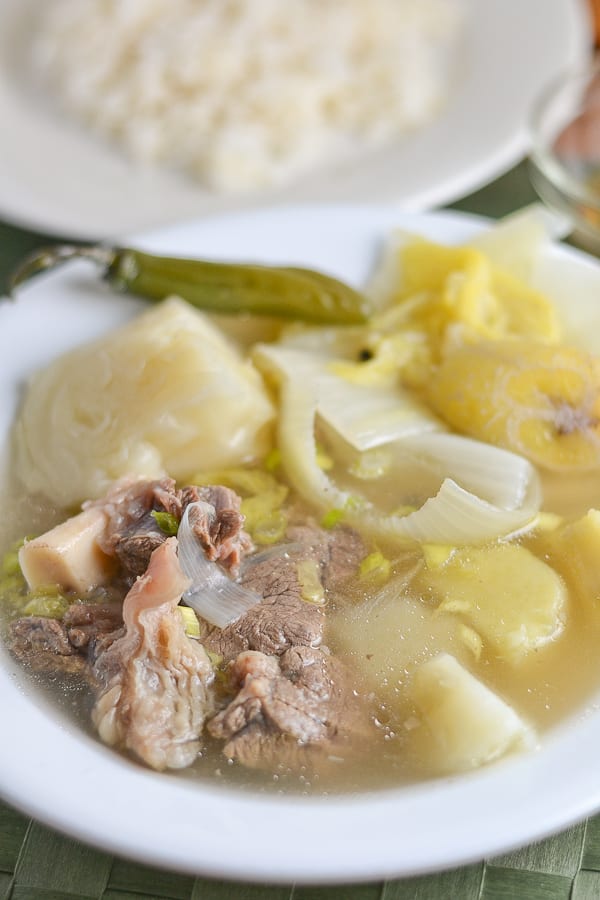
Weather here in Vancouver has been cold and dreary, so this soup was just the perfect meal to prepare for my family. I regularly cook nilaga for my family so I just followed the same procedure and added garlic, ginger, sugar and sweet potatoes. I used beef shank in this recipe because it is a flavorful piece of meat and is great for soups. Other meats like pork or chicken may also be used. This beef lauya soup, with the added ginger and garlic may tastes different from nilaga but they are both very comforting and satisfying. Everyone enjoyed a bowl of this hearty and delicious soup and according to my husband, lauya is now his favorite soup.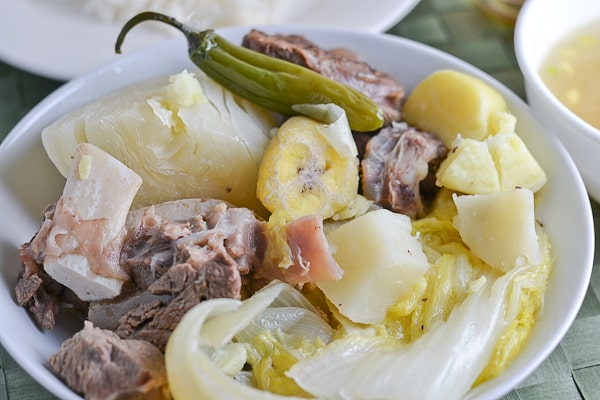
Cooking Tips for Beef Lauya
To elevate the flavors of your beef lauya, consider marinating the beef shank in a mixture of soy sauce, garlic, and ginger for at least an hour before cooking. This adds depth to the meat and enhances the overall taste of the soup. When simmering the beef, make sure to skim off any foam that rises to the surface. This helps achieve a clearer broth. For a richer flavor, use bone-in beef shank, as the marrow contributes a wonderful taste and creaminess to the soup. If you prefer a bit of spice, add some chili peppers or a dash of pepper flakes during the cooking process. Always taste the broth before serving to adjust the seasoning. A little extra salt or a squeeze of lime can make a big difference.
Serving Suggestions and Variations
Beef lauya is perfect as a standalone dish, but serving it with a side of steamed rice is a classic choice. The rice soaks up the flavorful broth and complements the hearty ingredients. For a twist, try adding some leafy greens like spinach or bok choy right before serving. This not only adds color but also packs in some extra nutrients. If you want to play around with flavors, consider incorporating other root vegetables like carrots or turnips. For a lighter version, substitute the beef with chicken or use tofu for a vegetarian option. You can also serve it with a side of dipping sauce made from soy sauce and vinegar to add an extra layer of flavor. Don’t forget to garnish with chopped green onions or fresh cilantro for that final touch.
Frequently Asked Questions
Can I use a different cut of beef for this recipe?
Beef shank is great for soups because it adds rich flavor, but you can also use beef chuck or brisket if that’s what you have on hand. Just remember, the cooking time may vary depending on the cut.
What if I don’t have saba bananas?
If you can’t find saba bananas, you can substitute them with regular plantains or even ripe bananas, although the texture and taste will be a bit different. Just adjust the cooking time so they don’t turn mushy.
How should I store leftovers of beef lauya?
Store any leftovers in an airtight container in the fridge for up to three days. You can also freeze it for up to three months, just make sure to let it cool completely before freezing.
Can I make beef lauya ahead of time?
Absolutely, making it ahead of time is a great idea. The flavors actually deepen after a day in the fridge, so you can prepare it the day before serving and just reheat when you’re ready to enjoy.
What sides go well with beef lauya?
Beef lauya is hearty on its own, but serving it with steamed rice or crusty bread can round out the meal nicely. A simple side salad or some pickled vegetables can also add a refreshing crunch.

Beef Lauya
Ingredients
- 3 lbs beef shank bone-in, cut into serving pieces
- 4 cloves garlic crushed and peeled
- 1 large onion peeled and halved
- Small knob fresh ginger peeled and crushed
- 1 tsp whole peppercorns
- 1 large potatoes peeled and cubed
- 3 around 1 lb sweet potatoes, peeled and cubed
- 3 ripe saba bananas plantain, peeled and sliced diagonally
- 1 small green cabbage halved and cored
- 1 small Napa cabbage bottom cut
- 2 Serrano peppers
- Fish sauce or salt to taste
- Brown sugar to taste optional
Instructions
- Put beef in a big pot and add enough water to cover it. Add salt and bring to a boil over high heat. Skim off scum accumulated on the surface, reduce heat to medium, cover and simmer for two hours, or until meat is fork tender. Add more water as needed.
- Increase heat to medium high and then add garlic, onion, ginger, peppercorns and potatoes; cook for 10 minutes.
- Add saba, cabbages and Serrano peppers; cook for another 10 minutes or until potatoes are fork tender.
- Correct seasoning by adding fish sauce or salt and brown sugar, if using. Serve with steamed rice and fish sauce with lemon juice on the side.
- Enjoy!
Nutrition
The lauya that I know is colored by achuete. Somehow the taste becomes different if the color is clear. Of course this is mostly psychological since achuete has no taste.
what if you cook one with achuete and one with none then blindfold to taste if there’s a difference? for experiment, ofcourse 😀
I have never heard of lauya with achuete. that’s interesting..
This is a unique recipe from Palawan, specifically from the natives of Cuyo which was once the provincial capital. The original Laoya uses pork and a kind of red bean known as lumabong common in Northern Palawan. Given what is available in the Philippines, leafy vegetables, jackfruit, and plantains accompany the pork. Souring agents are either tamarind or kamias, depending on what is available.
Hopefully, we can cook Laoya closer to its origins and its tradition.
Thank you for your insight and for sharing the history of the recipe 🙂
Delicious! I also put upo and ginger as additional veggies!
Sarap!