
Cooking Tips for Perfect Pesto Penne
To achieve the best flavor in your pesto penne, use fresh basil if possible. The bright flavor of fresh basil makes a significant difference compared to dried herbs. When making the pesto, add the garlic and nuts to the food processor first. This helps to chop them finely before adding the basil and oil. Blend until smooth, but don’t overprocess; a bit of texture adds character to the sauce. When cooking the penne, make sure to salt the water generously. This ensures that the pasta itself is flavorful. Cook the pasta until al dente, as it will continue to cook slightly in the sauce. Reserve a bit of the pasta water before draining. This starchy water can be added to the sauce to help it cling to the pasta better.
Serving Suggestions
Pesto penne is versatile and can be served in various ways. For a simple meal, plate the pasta with a sprinkle of freshly grated Parmesan cheese on top. A handful of cherry tomatoes, halved, adds color and a burst of sweetness. If you want to elevate the dish, consider adding grilled chicken or shrimp for protein. Sautéed vegetables, like zucchini or bell peppers, can also bring a fresh crunch. For a more substantial meal, serve the pesto penne alongside a mixed green salad dressed lightly with olive oil and vinegar. This balances the richness of the pasta nicely. If you are serving guests, consider adding garlic bread on the side for a comforting touch.
Storage Instructions and Variations
If you have leftovers, store them in an airtight container in the refrigerator for up to three days. When reheating, add a splash of olive oil or a bit of the reserved pasta water to prevent it from drying out. Pesto penne can also be frozen. To do this, portion it into freezer-safe containers, and it will last for about a month. Thaw overnight in the fridge before reheating. For variations, experiment with different nuts in your pesto. Pine nuts are traditional, but walnuts or even cashews can offer a unique twist. You can also play with flavors by adding sun-dried tomatoes or roasted red peppers to the pesto. For a spicy kick, a pinch of red pepper flakes can be stirred into the sauce.
Frequently Asked Questions
What can I use instead of pine nuts?
If you’re looking for a substitute for pine nuts, try walnuts or almonds. They have a similar texture and flavor, though the taste will vary a bit.
How should I store leftover pesto penne?
Store any leftovers in an airtight container in the fridge. It should be good for about 3 days, but the pasta might soak up some of the sauce, so you might want to add a splash of olive oil when reheating.
Can I make the pesto ahead of time?
Absolutely, you can make the pesto a day or two in advance. Just store it in the fridge in a sealed container, and consider adding a thin layer of olive oil on top to help prevent browning.
What are some good protein options to add?
Grilled chicken or shrimp are great additions if you want some protein. For a vegetarian option, consider adding chickpeas or even some sautéed mushrooms.
What common mistakes should I avoid?
One mistake is overcooking the pasta, so aim for al dente. Also, be careful not to overprocess the pesto; it’s nice to have some texture in there for extra flavor.

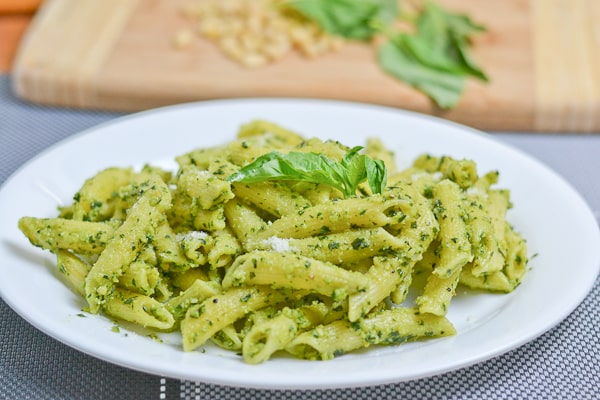
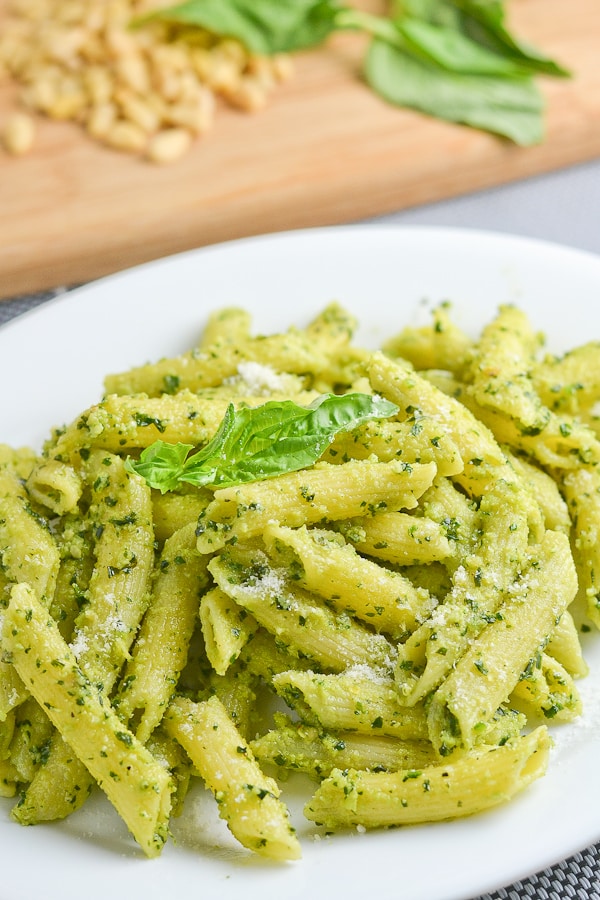
Pesto Penne
Ingredients
- 1 large bunch fresh basil
- 2 cloves garlic smashed and peeled
- 1/4 cup pine nuts
- 1/2 cup extra-virgin olive oil
- 1/2 cup freshly grated Parmesan
- 1/2 teaspoon kosher salt plus more for seasoning
- Freshly ground black pepper
- 1 pound penne rigate or other ridged small tube pasta
Instructions
- Pluck basil leaves from stems (you should have about 2 cups leaves). Wash the leaves in a large bowl of cold water and dry in a salad spinner or pat dry with paper towels.
- Put the basil, garlic, and pine nuts in a food processor and pulse until coarsely chopped. With the processor running, gradually add the olive oil and process until the pesto is smooth. Transfer the pesto to a large bowl and stir in the cheese. Season with salt and pepper.
- Bring a large pot of cold water to a boil over high heat and salt it generously. Add the penne and boil, stirring occasionally, until al dente, about 8 to 10 minutes. Drain in a colander and save about 1/4 cup pasta cooking water. Add the pasta to the bowl. Use tongs and toss with enough of the cooking water so the pesto coats the pasta evenly. Season with salt and pepper to taste. Serve warm.
Notes
Nutrition
I am so craving pesto pasta after seeing this post. It looks so delicious!