
Cooking Tips for Perfect Yaki Udon
To achieve the best texture for your yaki udon, start with fresh noodles if possible. Fresh udon noodles tend to have a chewier texture and soak up the sauce beautifully. If you’re using dried noodles, make sure to cook them just until al dente before adding them to the stir-fry. This helps prevent them from becoming mushy. When stir-frying, use high heat to give your dish that lovely charred flavor. A good non-stick skillet or wok makes a difference, allowing for easy tossing without sticking. Adding the vegetables in stages is helpful. Start with the ones that take longer to cook, like carrots, and then add quicker-cooking ones like zucchini. Keep everything moving in the pan to ensure even cooking. Lastly, don’t be shy with the sauce. A generous amount adds flavor and moisture, making the dish more enjoyable. Taste as you go and adjust the seasoning to your liking.
Serving Suggestions and Variations
Yaki udon is versatile, so feel free to get creative with how you serve it. For a complete meal, pair it with a side of miso soup or a simple salad dressed with sesame oil. If you’re feeling adventurous, top your yaki udon with a fried egg. The runny yolk adds richness and elevates the whole dish. For a spicier kick, a sprinkle of chili flakes or a drizzle of sriracha can really enhance the flavors. If you’re looking for variations, consider swapping the beef for chicken, shrimp, or tofu for a vegetarian option. You can also switch up the vegetables based on what’s in season or what you have on hand. Bell peppers, broccoli, and snap peas work wonderfully as well. Remember, the beauty of yaki udon lies in its adaptability. Enjoy experimenting until you find your perfect combination.
Frequently Asked Questions
What vegetables can I add to my beef yaki udon?
This dish is super flexible, so you can mix in veggies like zucchini, carrots, mushrooms, or cabbage. Just remember to add the tougher ones first and the quicker-cooking ones later to keep everything perfectly cooked.
How should I store leftovers?
Leftover yaki udon can be stored in an airtight container in the fridge for up to three days. Just make sure to reheat it on the stove or microwave until it’s piping hot.
Can I make this dish ahead of time?
While it’s best fresh, you can prep the ingredients in advance. Chop your veggies and slice the beef ahead of time, but wait to cook the noodles and stir-fry everything until you’re ready to eat.
What can I use instead of yakisoba sauce?
If you can’t find yakisoba sauce, a mix of soy sauce, ketchup, and a little sugar can work in a pinch. It won’t be exactly the same, but it’ll still give you a tasty flavor.
What’s the best way to prevent the noodles from getting mushy?
Cook your udon noodles just until they’re al dente before adding them to the stir-fry. Using high heat while cooking is also key to getting that nice char and keeping them firm.

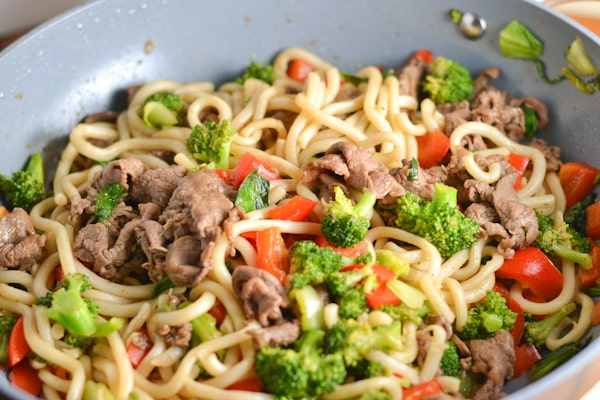
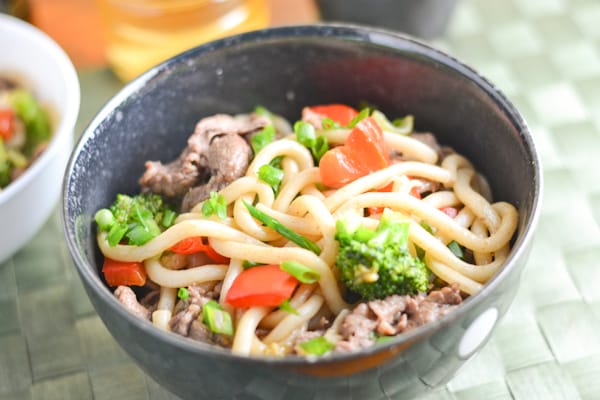
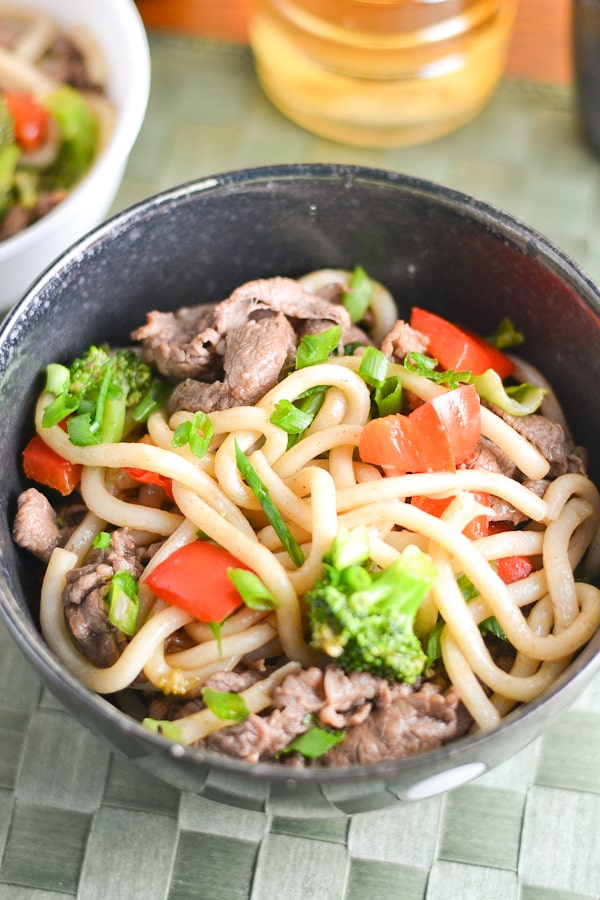
Beef Yaki Udon
Ingredients
- 2 tbsp soy sauce
- 2 tbsp mirin
- 2 tbsp yakisoba sauce found in Asian grocery stores
- 1 lb thinly sliced beef beef used for shabu shabu or sukiyaki
- 3 200 g package fresh udon noodle
- 4 tbsp olive oil divided
- 1 red bell pepper seeded and cubed
- 2 cups partially cooked broccoli florets
- 3 bok choy chopped
- Chopped green onions
Instructions
- In a small bowl, whisk together soy sauce, mirin and yakisoba sauce. Set aside.
- In a separate bowl, mix beef with 1 tbsp of the sauce. Set aside.
- In a medium pot, cook udon in boiling water for 2-3 minutes. Rinse with cold water and drain. Set aside.
- In a large frying pan or wok, add 2 tbsp oil and heat on medium high heat. Add beef and stir-fry briefly until no longer pink. Using a tong, transfer beef to a plate, discarding accumulated juices.
- Wipe pan clean with paper towels. Add remaining 2 tbsp oil in now empty pan. Add red bell pepper, broccoli and bok choy. Sauté for 3-5 minutes or until vegetables are crisp tender. Add cooked beef, noodles and sauce. Gently stir until well combined. Sprinkle with green onions.
Notes
Nutrition
Leave a Reply